


Discovering South Carolina’s
Marine Ecosystems
A bilingual environmental learning experience focused on marine ecosystems, coastal wildlife, environmental research, and conservation through guided outdoor exploration.

Experience Overview
Discovering South Carolina’s Marine Ecosystems was a bilingual outdoor environmental learning experience designed to connect participants with coastal wildlife, marine ecosystems, environmental research, and conservation awareness through guided exploration and community engagement.
Key Learning Areas
🐚 Marine Ecosystems
🌿 Conservation Awareness
🔬 Environmental Research
🛶 Outdoor Environmental Learning
Exploring South Carolina’s coastal habitats and marine biodiversity.
Understanding the importance of protecting marine ecosystems and coastal wildlife
Learning how scientists study coastal environments and marine species.
Strengthening environmental awareness through guided outdoor experiences.
Educational Objectives
Participants explored South Carolina’s coastal ecosystems while learning about marine wildlife, environmental research, conservation awareness, and the importance of protecting natural habitats through guided outdoor educational activities.

About This Experience
-
Participants explored South Carolina’s coastal ecosystems through a bilingual outdoor environmental learning experience aboard the educational vessel Discovery, guided by environmental educators and marine science professionals from the South Carolina Department of Natural Resources (SCDNR).
-
During the experience, participants learned about estuaries, salt marsh ecosystems, marine habitats, coastal wildlife, water quality, conservation practices, and the importance of protecting South Carolina’s marine environments
-
Educational activities included wildlife observation, marine species identification, environmental research demonstrations, habitat exploration, and discussions about estuarine ecosystems, biodiversity, and conservation efforts along the South Carolina coast.
-
Participants also explored the importance of environmental stewardship and how healthy estuaries support wildlife, fisheries, coastal protection, and local communities.
Educational Collaboration
This environmental learning experience was made possible through collaboration with environmental educators, marine science professionals, and conservation partners committed to bilingual environmental education and community engagement.
SCDNR – Marine Resources Division
Erica Hardy – Education Coordinator
Olivia Hood – Outreach Biologist
Rebecca Cottingham
Morgan Smith – Outreach Biologist
SCDNR – Executive Division
Alix A. Pedraza – Director of Community Engagement
Photo Highlights


Compost & Sustainable Waste Awareness
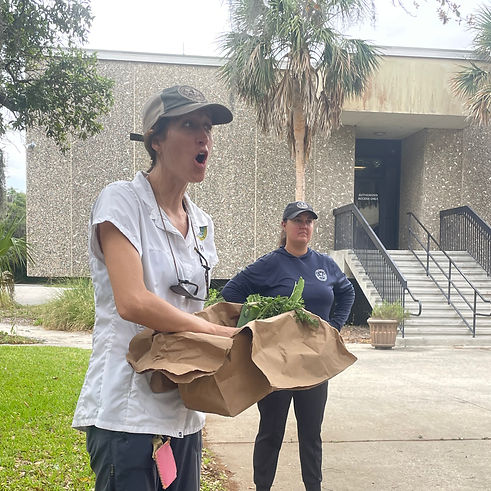
Participants had the opportunity to learn about composting and sustainable waste management through an educational session led by Olivia Hood, Outreach Biologist with the South Carolina Department of Natural Resources (SCDNR).
During this hands-on learning experience, children, youth, and families explored how organic waste such as food scraps and natural materials can be transformed into nutrient-rich compost that helps improve soil health and reduce environmental waste.
The activity encouraged participants to reflect on how small daily actions can positively impact our environment and support more sustainable communities.
 |  |  |  |
|---|---|---|---|
 |


Oyster Recycling &
Marine Conservation
Participants also enjoyed an engaging educational experience focused on oyster recycling and the important role oysters play in South Carolina’s coastal ecosystems. Through interactive activities and games, children and youth learned how recycled oyster shells can help restore oyster reefs, improve water quality, and provide habitat for marine life.
The activity encouraged participants to explore marine conservation in a fun and hands-on way, helping them better understand the connection between healthy coastal ecosystems, biodiversity, and community environmental stewardship.
Participants also learned that oyster shells can be recycled at designated collection sites throughout the Charleston Tri-County area, where shells are later used to help rebuild and restore local oyster reefs along South Carolina’s coast.


Environmental Painting Activity
Children and youth also participated in a creative environmental painting activity designed to encourage self-expression, imagination, and connection with nature.
Through art, participants reflected on the importance of protecting wildlife, marine ecosystems, and the natural beauty of South Carolina’s coastal environments. This activity helped combine environmental education with creativity, teamwork, and community engagement in a fun and meaningful way.


Community Lunch & Shared Reflection
At the conclusion of the educational experience, participants shared lunch together at the Marine Resources Research Institute facilities, creating a welcoming space for conversation, reflection, and community connection.
This shared moment allowed families, children, educators, volunteers, and environmental professionals to continue exchanging ideas about conservation, outdoor learning, and environmental responsibility while strengthening relationships within the community.


Through experiences like these, Green Horizon Academy continues strengthening bilingual environmental education, conservation awareness, and community connection with South Carolina’s coastal ecosystems.